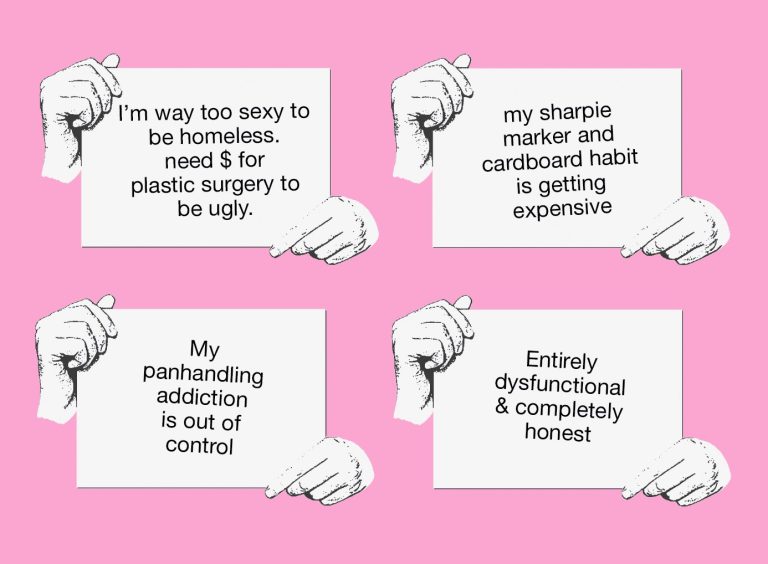

You may have seen us flying the sign on the highway exit ramps or asking you help us find work or get a meal.
We are not victims. You should know that.
Sometimes we are hungry. Sometimes we are beggars. But victims—never.
We are not victims. Some of us have made bad choices; others are here by bad choices made by others. Some of us have had the “American Dream”; others have been in this nightmare forever!
We are not victims. Some of us have recently dropped, or been dropped, outside. Others have been outside so long they can call it “home.” Some would be inside in a minute; others, they would not do well inside too soon.
We are not victims. Some of us have the things we need to keep from dying when it is cold, like a tent and bag and maybe even extra clothes. Others have nothing but the clothes on their bodies and what meager possessions that will fit in a pack on their backs. Some of us have had everything stolen.
Most have lost so much more than we have.
We are not victims. Some of us have hope, dreams and aspirations. Others have a bleak acceptance of the hard streets, of endless bridge abutments, homeless shelters, construction sites, and even service station restrooms. We need some quiet rest, warm and dry. Safety is a concern we haven’t had the luxury to entertain.
We are not victims.
Look at us. No, not at us, but look us in the eyes like you like at your inside people. The eyes have been called “the window to the soul.” Try and see our selves. We are scared. We are lonely. We are hungry. We are overheating or freezing. We are feeling so unloved, sometimes desperately, that we have done, do, and will do things that we dislike.
Some of us are on drugs either because drugs brought us here, or we are on drugs because of being here. But most of us have a child inside us—who we were before whatever brought us here.
We are not victims. Look us in the eye and say you can’t help us, that’s okay. But please, at least see us for who we are, not for where we are.
Talk to me. Ask about me. You may have judged us. We understand. I may have judged you. You may be embarrassed for us. We may even repulse you. I’ve been there too—in your shoes, unsure of how to respond.
We are children of God, just like you. Fellow citizens, just like you. We aren’t a different type of human, a lesser grade of quality.
Right now we are homeless. We don’t plan to stay that way.
Talk to us. Maybe you’ll learn something about us. Maybe you’ll learn something about yourself. At least don’t ignore us. Don’t look past us. We are people.