




1 / 20
Read as text
Page 2
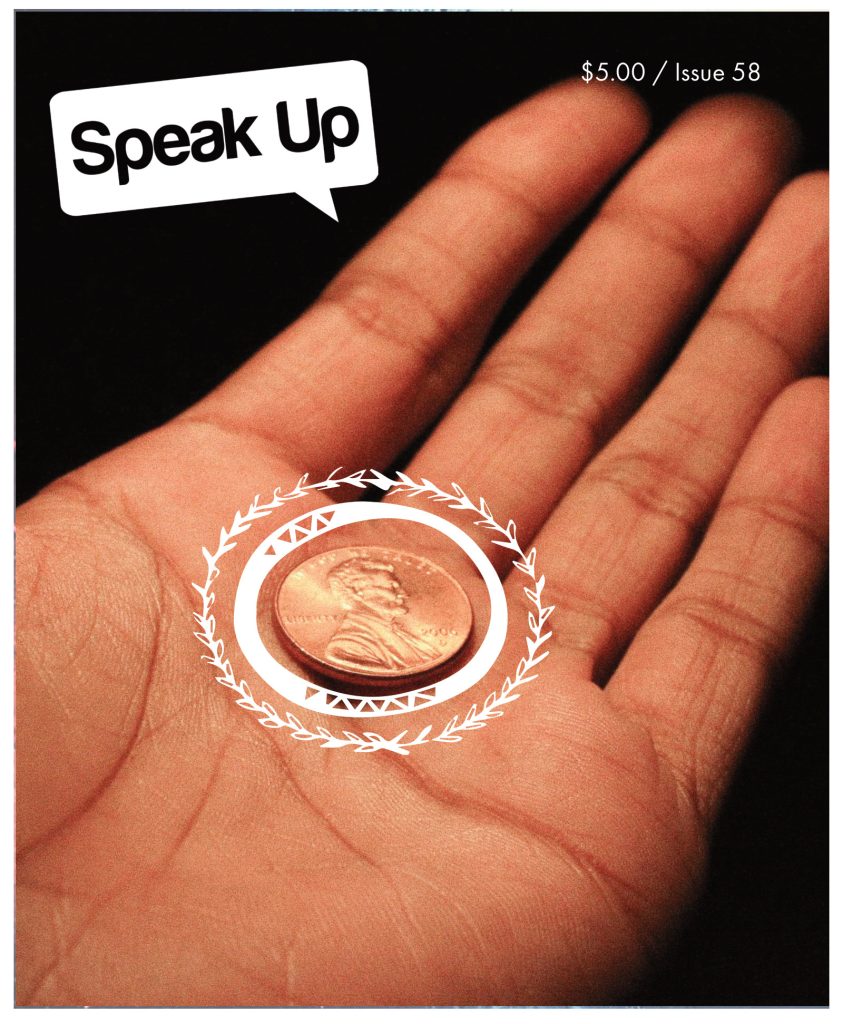
Pennies
from
God
Story by Matt Shaw, from interviews and conversations
Page 3
Sometimes one
American cent goes
further than a $100 bill.
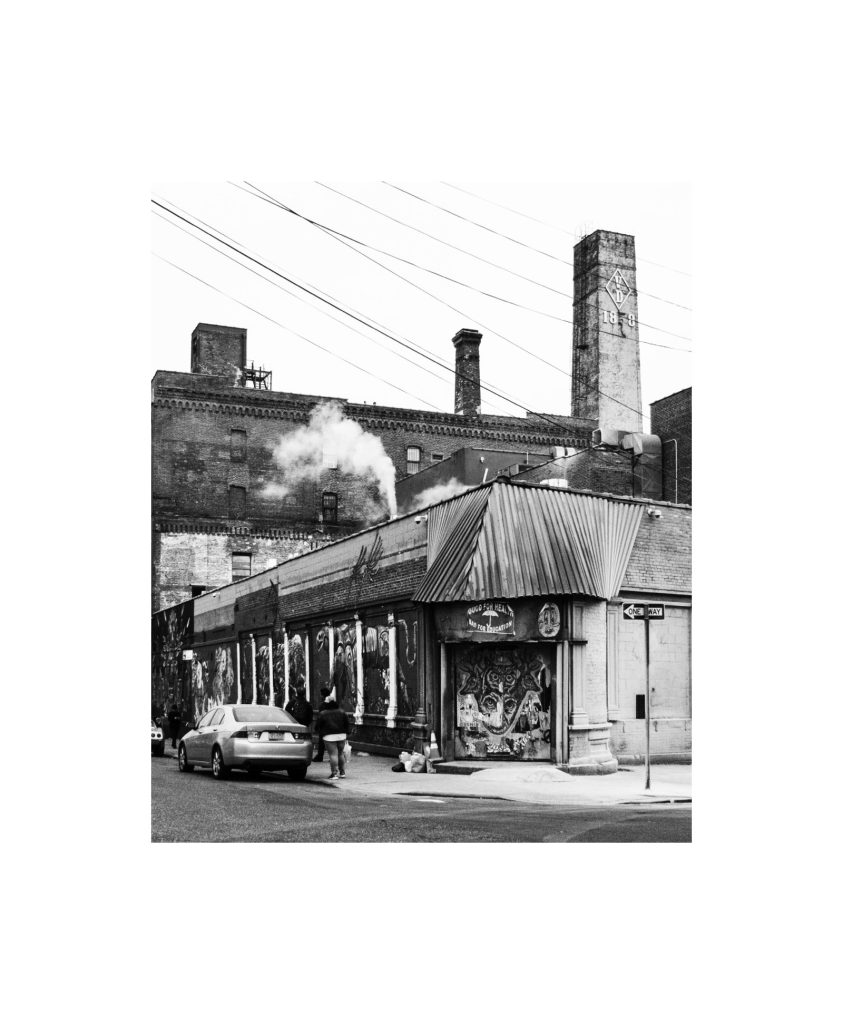
Julia lives in an industrial warehouse storage room owned by
an old friend. Her storage room—a big closet, really—has a
door that locks; and over the years, she has retreated there
often to escape domestic abuse, eviction and living on the
streets. She is there now and has been for a year. She has tried
to turn her closet into a home. Sometimes she calls it that,
home, but then catches herself and says, “It isn’t a home; it’s
just a little room.” In it, she has a dry place to sleep at night
and a sense of safety. There is a small heater, a mini-fridge,
and microwave and a mattress on the floor.
Page 5
Most nights of the week when she’s safely ensconced in her
room, one of the older warehouse workers lets himself into
the building to harass her. Frankie knocks on her door, tap,
tap, tap, like a psycho from a slasher movie, tap, tap, tap.
Frankie wants to come in, or he wants her to come out. She
doesn’t open the door for him, because by this time he’s had
a dozen beers. He’s punched her before, and she’s terrified of
him. She won’t report the abuse because she doesn’t want to
jeopardize her place. The heavy metal door keeps him out.
Even with the door locked, she isn’t safe from his words.
“You’re an ugly old hag,” he calls through the door, tapping
on it relentlessly, “Open up! No one loves you anyway, you
old hag.” When she talks about this later, her body is wracked
with deep sobs, and she says, “It’s true, I am old and ugly. No
one wants to be around me.” (Actually, she is charismatic and
beautiful. On the verge of sixty and with a careworn face,
Page 6
her blonde hair, deep brown eyes and prominent cheekbones
reveal a timeless beauty that hardship will never extinguish.)
She’s been abused, in every way, since girlhood. The nightly
raging from beyond the door is normal to Julia.
From the far side of the room, she huddles on her mattress
looking past her piled suitcases and stuffed animals. As dark
clouds move across her mind, she clenches her fists with rage
and fear. “Am I ever going to get away from this?”
There is a gallon-size plastic zipper bag in the corner of the
room. It is full of pennies—brown and worn, coppery gold,
new and crisp, jagged and worn. For now, Frankie’s pounding
on the door is muted, and her ears re-tune to a divine music.
“My pennies from God,” she says. “I have found hundreds
through the years.”
In the morning, she wakes up and takes the bus to the YMCA
for her daily shower which makes her “feel like a real person.”
Page 8
Everything she needs for the day goes into a ratty, floral-print
rolling backpack. It is ripped and scuffed, but it will work until
she can get a new one. From morning to evening, it carries her
essentials – money, medication, extra clothes, copies of Speak
Up magazine that she sells – her rolling closet, medicine chest
and resupply store.
She has her eye on new one, a good one, that costs $150.
And as she’s trundling along, dragging her old bag, wondering
if she’ll get a new one, there she sees it—glinting up from
the edge of the sidewalk, a shiny copper penny — a promise
to her unsaid prayer. Yes, she will get that bag she’s been
dreaming about.
She sells Speak Up Magazine to earn money for herself, but
she is constantly looking for a job with a more regular rhythm
of income. Selling the magazine is fine, but it also leaves her
Page 11
unprotected from harassment. In the process of selling the
magazine every weekday, she’s been cursed at, insulted and
threatened. “If you don’t leave this spot, we’re going to beat
you to a pulp,” a trio of crack addicts told her a few months
ago. So she moved a few blocks away, head and spirits sagging
just wanting some peace, praying for things to get better.
Then she saw it. Wedged in the sidewalk crack: a penny. She
picked it up, knowing something good was going to happen
now. Later that day, the addicts came back and told her they
were sorry. Now they watch out for her. Just last week, she was
trying to convince one of them to quit drugs and come sell
magazines and get his life back together. “Julia, that sounds
like something I can do. I can do that. I am going to do that. I
can do that.” He kept repeating it, trying to persuade himself.
The men in her life have mostly been bad. Her husbands,
there were more than one, were alcoholics or abusers. When
Page 12
she was married to the fireman, he would beat and hit her
until the neighbors called the police. When they showed up,
the fireman would stand on the porch with his buddies and
they’d laugh and joke together for awhile. Julia would cower
inside. Finally one day she ran away – ran out of the house
into the park across the street and never went back.
For the last couple years, she’s been finding the pennies.
During the day, she puts them in her pocketbook. At night,
she empties them out into the bag in the storage room. “If I
see my pennies, I know the Lord is with me because when I
am afraid that’s how he says, ‘Yes, Julia, here I am.’” She says.
During one of Julia’s hardest winters, when her son was
younger, her siblings turned on her viciously. She cries as she
remembers when her teenage son was invited to her sister’s
house for holidays but she was not. Even after he was already
there, they called and asked her to come by, and met her on
the porch. She could see the holiday party happening behind
Page 14
them through the open door—the decorated tree, Christmas
sweaters, the rich smell of the honey ham. “We wanted to
tell you face-to-face that your son can stay here as long as he
wants, but you aren’t welcome in this house. You’re a worthless
drunk.”
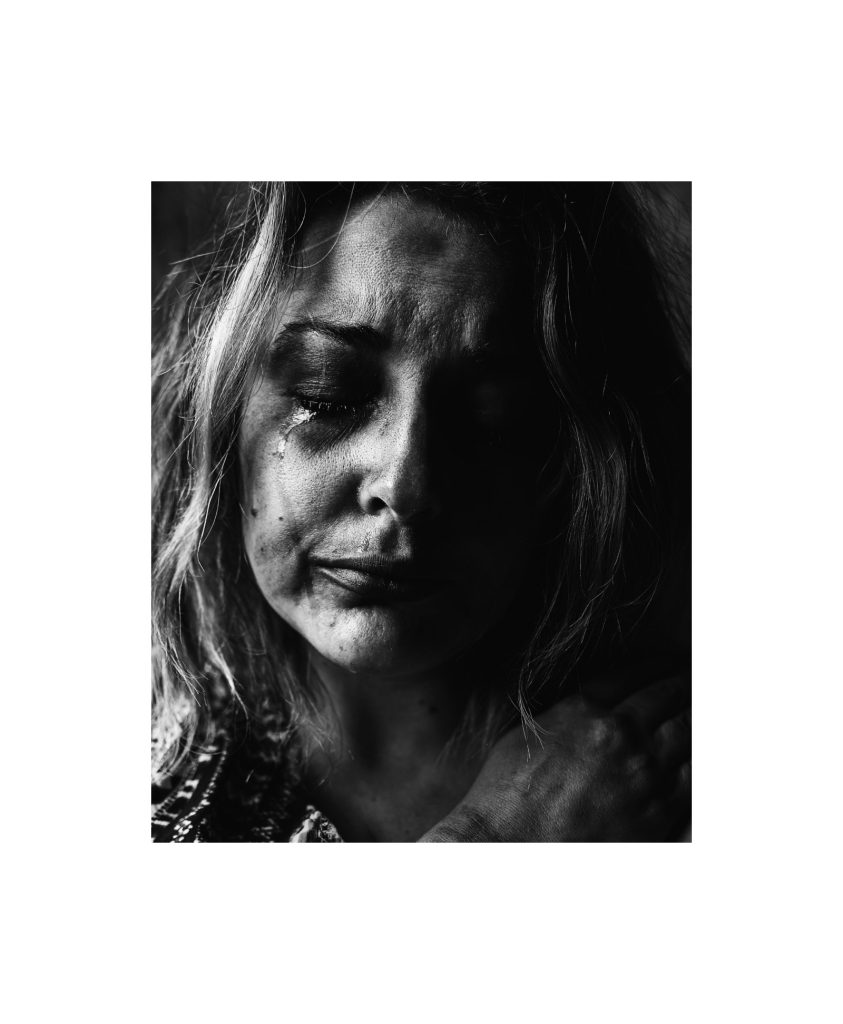
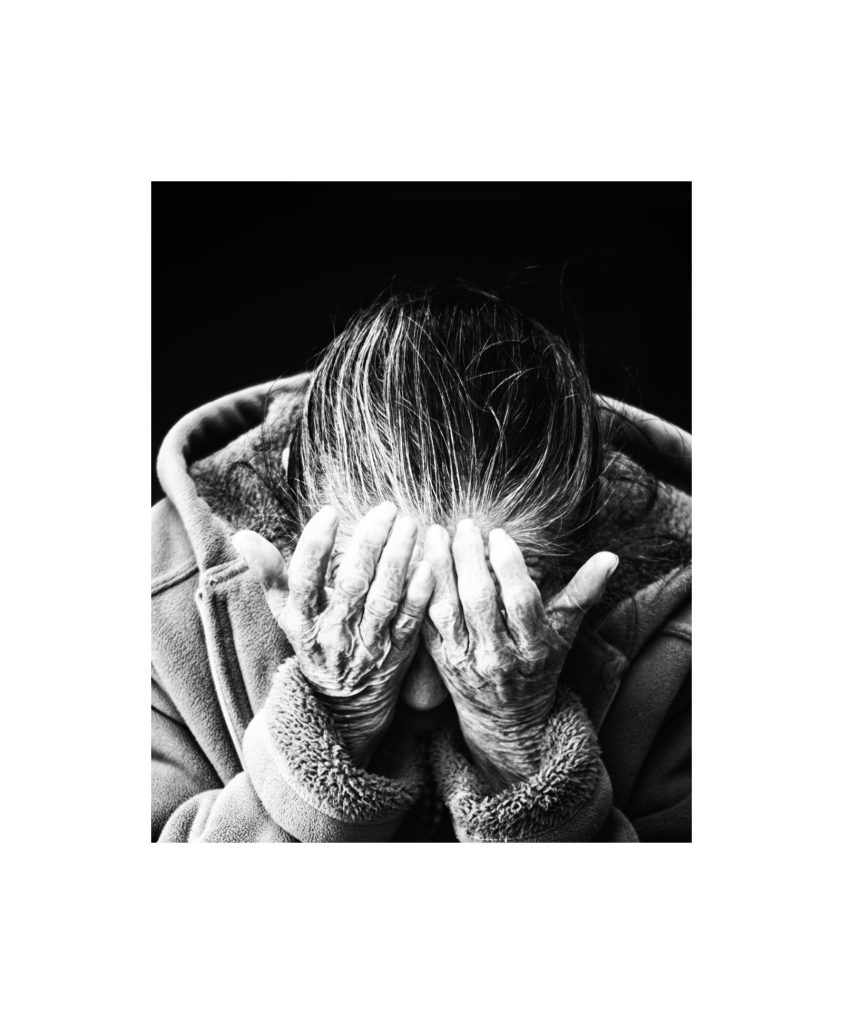
That was twenty years ago. Huge tears pour down her face as
she talks about it today. “Why did they say that to me? How
could they?” She pauses and closes her eyes and takes a breath,
her penny pocketbook clutched in her hands. “But I know I
need to forgive them. I did forgive them. God forgives me so
now I forgive them.”
But then she’s alone, waiting alone for a bus, bouncing her
backpack down an alley, and the darkness sweeps back in. She
hears the curses and insults, she relives the abuse, it all swells
together and threatens to overwhelm her.
There was the sister Julia took in, the one who had an affair
with Julia’s husband and conspired to put Julia out onto
Page 17
streets. She ended up homeless while the sister and husband
stayed together. The sister died years ago, and Julia can’t ask
her why, can’t cry out her pain, can’t demand an apology, can’t
even give forgiveness.
Those are the worst moments, when everything is black and
hope is hard to see. She just wants to scream, to cuss, and
make someone care. The homelessness, the broken backpack,
the hundreds of inconveniences of being on the streets, the
decades of abuse and rejection all conspire to steal her hope
and undermine her will to move forward and kill the desire to
take another step—to take another breath.
And when all is lost, in that moment of accumulated agony
and invisible desperation, she sees it.
One more penny.
Page 18
There upon the sidewalk, a little copper promise, an invitation
to forgiveness, a whisper from the Divine, her assurance of
redemption. She stops to pick it up, battered and alone. As she
does, that quiet little voice within, a truer voice than all the
others, the truest voice ever known, grows louder and assures
her—and she knows it with absolute certainty, as if her life
depends on it, because it does—that everything will get better.
She will know peace.
The best is yet to come.
All that was lost will be restored, promises will be fulfilled,
forgiveness will prevail, and her true family awaits in heavenly
courts, where the penny-dotted alleys give way to streets
paved in gold.
Page 20
Speak Up equips remarkable people facing homelessness (like
Julia) with a chance sell a magazine that releases their voice and
empowers them with income.
As they buy and sell magazines (and keep the profits), they discover
dignity, develop skills, accomplish goals, and get off the streets.
Speak Up is a 501(c)3 nonprofit.
Your donations make it happen. Please give.
Speak Up
501 Hawthorne Lane
Charlotte, NC 28204
SPEAKUPMAG.ORG
@speakupmag on social media