


1 / 24
Read as text
Page 1
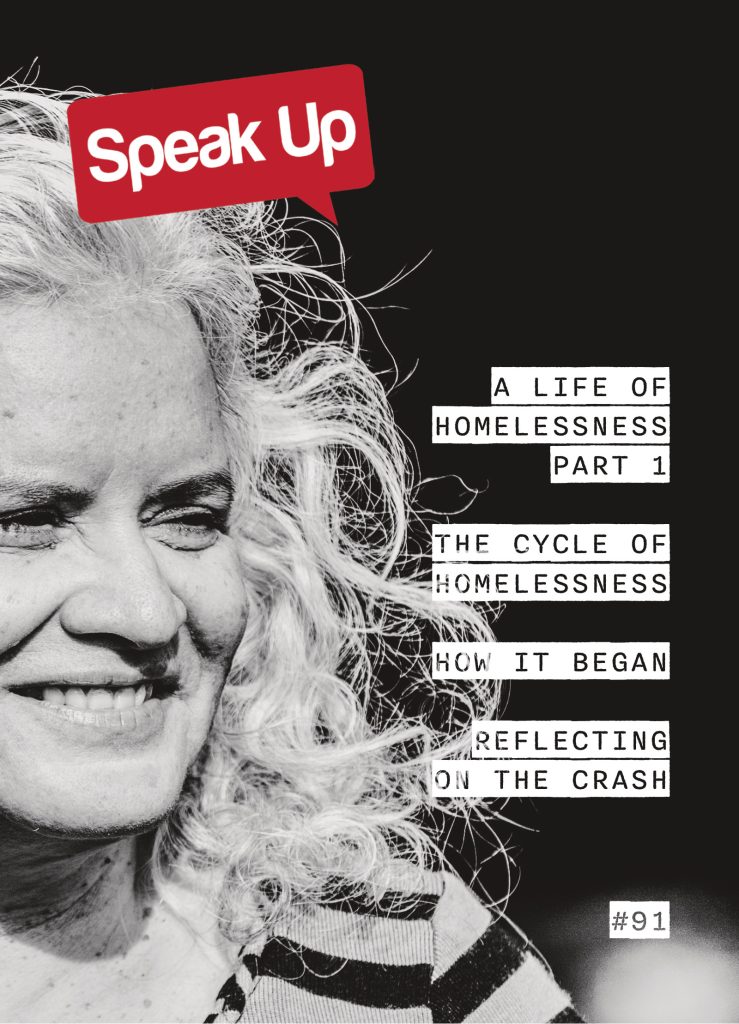
A LIFE OF
HOMELESSNESS
PART 1
THE CYCLE OF
HOMELESSNESS
HOW IT BEGAN
REFLECTING
ON THE CRASH
#91
Page 2
the writers
MARK CARLOS
LYNN ELIJAH
Page 3
A LIFE OF
HOMELESSNESS
PART 1
MARK GANSERT
early four decades ago, at the age of
15, I was kicked out of my mother’s
house by her boyfriend. This came after
3 years of nearly non-stop mental and physicalNabuse at the hands of my mother.
I wound up at a Salvation Army shelter for
men. This was the mid-1980s. Unfortunately, the
laws at the time labeled me as a juvenile delin
quent, which led me nearly directly to what was
reform school and being a ward of the court.
Page 4
My “real” first job was at a drive-thru ham
burger joint where a friend from high school was
the manager. He knew of my situation and took
pity on me.
For only two weeks, I was allowed to work
before a family court judge put me into reform
school for a 30-day ““valuation,” which was not
really an evaluation but more a punishment—for
continually running away from abuse.
When released back to my mother’s house, the
abuse continued. My closest friends would come
over and sit in my room while we played video
games. However, the real reason was to have wit
nesses so I wouldn’t go to school with a black eye
or fat lip.
This arrangement worked for a little while,
however, when they left, the abuse went unabat
ed. During this time, I, now a ward of the court,
was eligible to take my GED, which I did and
easily passed.
During the summer of my 15th year, I spent
Page 5
most of my time hiding at a medical software
company. The owners of the company knew my
mother and her abusive ways.
When forced to attend work-related functions
where my mother worked, her co-workers would
ask me if I was okay. They knew how she was.
I’d go to the software company and make cof
fee, sweep up, and learn about programming. I
hated to have to leave at the end of the day.
After my 16th birthday, my bosses at the soft
ware company bought me a gift: a used Dodge
pickup truck with a camper shell. I immediately
turned it into a place to sleep. I would sleep over
night in the parking lot of the software company.
It was a godsend to me.
But my juvenile court officer was continually
riding me because I was never at the house. It
didn’t matter to him that it was so stressful and
awful that I couldn’t sleep in that house. My pleas
fell on deaf ears and he filed for a revocation of
my supervision.
Page 6
Which led to me being forced back to reform
school for a 3-month stay. Having a GED was
absolutely unheard of to the people in charge
of the reform school. They didn’t know what to
do with me. So I ended up mopping floors for 3
months straight until I was released back to my
mother’s house.
My mother and her boyfriend (who actually
was still married to his wife) decided that I would
only be able to come into the house at night and
had to leave in the morning.
I wrote a letter to the judge asking to be eman
cipated from my mother.
This didn’t sit well with her.
During a particularly violent attack, as she
swung her fist to strike me, I turned away to
avoid the blow. Her little finger got caught in the
neck of my shirt, and she ripped the tendon in
her little finger.
Her boyfriend, who was sitting there watch
ing child abuse like a television show, got up and
Page 7
attacked me. We ended up in the front yard, me,
a 16-year-old, and him a WW2 Marine. The
neighbors next door called the police who rolled
up as he landed a punch to my stomach.
Both of us wound up in handcuffs. I went back
to reform school on an indefinite commitment.
Reform school was a welcome relief. This time
they placed me in college-level classes, and I had,
within a matter of months, competency certifi
cates in Data Entry and the Building Trades.
Thankfully after I spent 6 months in reform
school, I was spared from being sent back home.
The reform school psychologist actually listened
to me, talked to my best friend, and began to un
derstand the situation.
Upon discharge, they shipped me to a home
less shelter.
I was now 17 and completely homeless. My
court supervising officer had me enroll in college.
I was released to a town with a large state uni
versity.
Page 8
When I realized exactly how easy college was,
I started taking massive amounts of classes per
semester, between 21-23 credit hours. My college
advisor, a doddering old man who sat in a dishev
eled office which smelled of old man body odor
and mimeograph fluid, would sign anything his
assigned students would hand him. This helped
immensely as 21 hours is typically three more
classes than a full load, which is usually frowned
upon.
After two packed years, I earned a Bachelor’s
degree in the most useless of majors: Philosophy.
Getting my degree allowed me to move from
the typical undergrad housing. Typical under
grad housing had meant that I lived in my truck
on school breaks. I moved into graduate school
housing, and they didn’t kick me out during the
holidays or summer.
The next year at the beginning of classes, I
found myself having an assigned roommate,
as they ran out of undergrad housing. My new
Page 9
roommate was a mess. He had zero ability to
maintain himself in an adult environment.
Now I was 19 and working nights at the city
morgue as a custodian. I only took ridiculous
classes to maintain my full-time status. Literally:
Basket Weaving and Hi-Fi Stereo.
One late night after I got off work, I answered
a phone call. The girl on the other end started
talking and kept talking. We really hit it off. Af
ter four hours straight hours on the phone, we
realized that we weren’t talking to whom we as
sumed. She thought it was my roommate and I
thought it was a girl I had met between classes.
She drove 400 miles to meet me the next day.
The day after that, I went to live with her.
Six months later, on December 23rd, we ex
changed vows in front of a judge.
Two months after that, she was pregnant.
At the time, we were both homeless.
Mr. Gansert writes often for Speak Up.
Page 10
THE CYCLE
OF HOMELESSNESS
CARLOS JERONIMO
often awoke in a shelter in despair to loud
noises and confusion. Most of the time, I
didn’t remember how I got there the night
before. I probably came in drunk as a skunk.IThe pain of bright lights on my eyes gave me
headaches. Undesirable odors and bitter faces
were all over the place.
I’m not going to talk badly about any shelter.
Thank God there are places for the homeless to
rest their heads and be safe. What would happen
Page 11
to us if we had to always sleep on the street under
inclement weather?
But after previously living in an apartment,
sharing a place with hundreds of individuals was
chaos for my mind. Following rules that made it
feel like an incarcerated environment.
Continuous friction could make someone ex
plode at any moment.
And then, out onto the street, to the contin
uous fight for survival. It feels like a jungle for
those who call it home.
After being homeless for some time, the shame
of what others will say gets lost. It no longer mat
ters if you sit to eat on the sidewalk or sleep be
hind a dumpster.
Our world seems to be on pause, like in the
vacuum of space. Our perception of reality is
numb. Options are out of reach. The only thing
left is to make it through the day.
As they say on the street:
“Another day in paradise!”
Page 12
It doesn’t matter where we go, they’ll kick us
out. This is when the feeling of rejection from so
ciety is felt.
And it’s not that we are bad people. We just fell
into a condition that is difficult to repair. Wheth
er it was self-induced, carelessness, or irresponsi
bility, we fell into a spiral of despair.
We struggle to restore our lives. It’s a steep
climb where you take two steps upwards and
fall right back down into the claws of addiction
where nothing matters anymore—you don’t care
what people will say or how you will die.
I gradually fell into the drinking cycle that
brought me down to my knees. Wake up with a
hangover, relieve my pain with alcohol, return to
drunkenness.
Others fall lower by taking more potent drugs:
crack, heroin, and fentanyl.
The physical and psychological condition be
gins to degrade.
Slavery to addictions, the homelessness cycle,
Page 13
and society’s rejection mark the final stage—loss
of sanity.
Many lives are lost along the way. Very few
find recovery.
This goes beyond just fate or chance to be able
to survive. It takes a superhuman effort not to
give up.
There are shelters to rest and sleep, recovery
programs, and therapeutic help that can guide us
to find the way out of that situation.
But everyone has to fight their own fight. You
have to want to want to escape the mess.
How did I overcome homelessness?
After many attempts and failures, slips and
falls, I managed to hold on to something I didn’t
want to let go of: Faith.
It was like finding a lifeboat in the middle of
a sea storm.
I abstained from alcohol for days and achieved
mental clarity, which made me recognize the se
riousness of my situation. And I started looking
Page 14
for help, with the urgency of a drowning man
who desperately wants to save their life.
I recognized the options that could help me
and the paths I should take. I took advantage of
my short periods of sobriety to see the positive
changes and encouraged myself to continue on
the right way.
I met people who recognized my efforts and
started helping me. Some with practical advice,
and another got me a job and a place to get out
off the streets.
Getting away from the stress helped me prog
ress, and I started seeing a new person in me. My
crooked past life got farther away.
I reached seven years of sobriety in March and
have never felt this good. Full of energy, joy, and
an immense desire to share writing the experi
ence of my life and looking for someone who can
read it and benefit from it.
Mr. Jeronimo is no longer on the streets.
Page 15
HOW IT BEGAN
LYNN MENDES
was a productive member of society, had a
good job, attended school, raised a family,
and was leading the good life when all of a
sudden it came to an end—through no fault ofImy own.
It could happen to you. You become penniless,
not knowing when you will have an income again
or be able to purchase items you could in the past.
You don’t know where you will sleep for the night
nor when you will find permanent shelter. Where
Page 16
will your next meal come from?
Homelessness can happen to anyone.
On my first night of homelessness I slept on
my suitcase. At the time I was in Rhode Island, it
gets quite cold there. I was then led to a day shel
ter called Traveler’s Aid. In the evenings we were
bused from there to the Welcome Arnold over
night shelter in nearby Cranston, which was a
renovated jail. Beds and hot meals were provided.
Other times I would avoid the cold in hotel
bathrooms or hidden in the basement at my
daughter’s apartment.
While homeless, the one thing I relied on the
most was my coat. It wasn’t just any coat. While
probably not too expensive, it didn’t belong on
the street. It was black, mid-length and fur lined.
It kept me warm on the nights I had to spend
outdoors and served as a cover for my time at
the Travelers Aid. Needless to say, my black coat
with its padded materials, kept me warm.
Sometimes I had to look inward for warmth,
Page 17
so I would compose and sing songs to myself.
I have found that a variety of places provide
help to the homeless. Churches such as the
Salvation Army provide homeless shelters, hot
meals, or sometimes cover the cost of a motel
room. Food kitchens allow people to cook a meal.
Community gardens can provide food fresh veg
etables.
On one particular night I going to the Rhode
Island area. I stopped in Connecticut and man
aged to pay for a week’s shelter at the Interna
tional Hotel. But knowing full well my desti
nation was Rhode Island (where I was from) I
decided to leave my paid-for room and continue
my journey. I was going home. That’s where my
family was.
I reached my home state and I went to the
Warwick Mall. Things became difficult and I be
came upset. The police were called and they in
formed me that I could “stay outside.” I crossed
the street and decided to bed down at the aban
Page 18
doned greenhouse.
On the night I stayed at the greenhouse, I
needed to use the bathroom. I leaned back, and
much to my surprise, the door to the building
opened. I went in, and used the bathroom. Later
I discovered that I had left my tennis shoes be
hind.
Anything helps when you are homeless.
What I remember most was how it all ended.
I finally began receiving disability payments and
had an income. Then my daughter purchased a
home in Rhode Island, which could house two
families. She allowed me to stay there. I finally
had a home again in secluded, serene, wooded
surroundings. That was when I felt safe again.
After a time of stability, I was able to relocate
to another city.
Ms. Mendes is no logner homeless.
Page 19
REFLECTING ON
THE CRASH
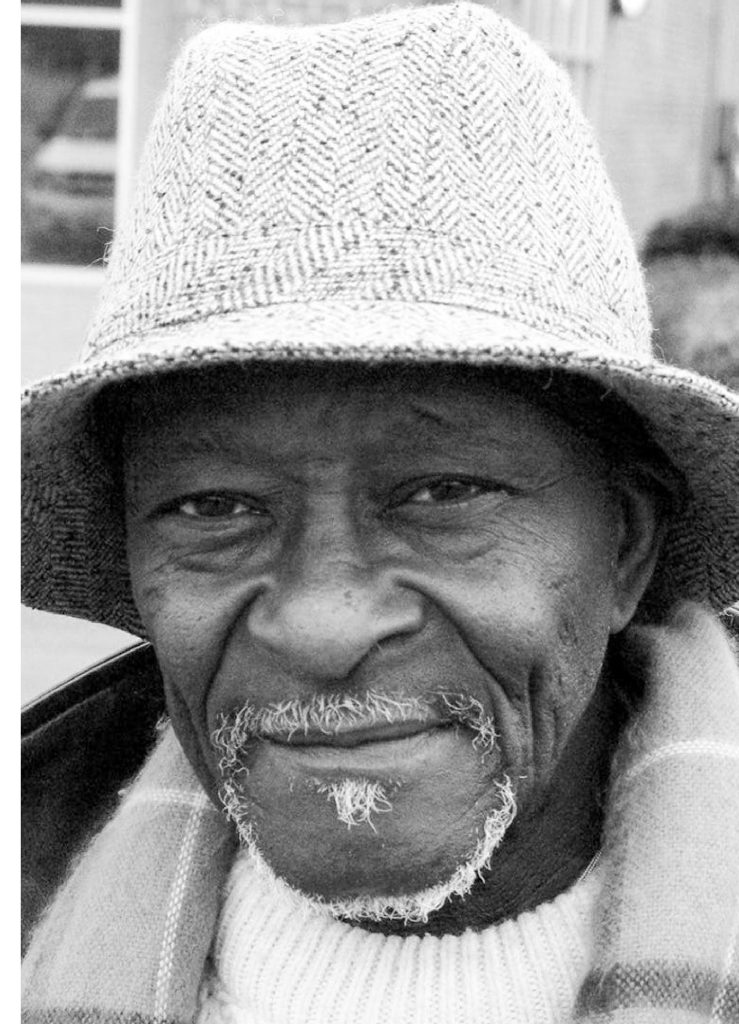
ELIJAH KELLY
y crash into homelessness wasn’t just
from one bad decision or a single
unlucky event.
Basically, for years, I made tons of bad choicMes. Bad financial choices, bad life choices. In just
about every area I was charging full-speed ahead,
in the wrong direction, in reckless pursuit of
self-destruction.
The whole time I thought I was living free and
having fun.
Page 20
I don’t recall writing into the script of my life a
scene called, “Rock Bottom.”
But there it was waiting for me: living on the
streets. Ouch. Ending up homeless was a rough
landing and rude awakening.
I still have the lumps to show for it.
The first thing I learned on the streets was to
have gratitude that I was still alive. I realized that
I was quite thankful to have even survived the
crash landing into homelessness. After gratitude,
the next order of business was overcoming this
dilemma.
All right, I got me down here. Now to get me
out.
Not an easy task, especially when you want to
“pull yourself up by your bootstraps,” but those
bootstraps keep moving out of reach no matter
what you do. More troubling was that I often
couldn’t even find the bootstraps at all.
I heard a sermon titled “My Destiny is Call
ing Me Out of the Pit.” At the time, my pit was
Page 21
homelessness. Climbing out of my pit happened
in small increments over time. I learned to stay
focused and fixated on overcoming. It was a pro
cess. It still is a process. One of my battles was
tempering my depression and its first cousin,
oppression. Despair and loss of self-esteem were
dark, daunting, and scary.
Simply staying focused was—and is—my
foremost order of business. From focus came the
ability to keep going in the right direction, even
in the hard times. I found that I was able to stay
focused and find the grit to overcome when I put
first things first. For me, first things first means
the number one spot goes to Jesus.
I took an honest inventory of myself, and
choose to reject the habits and deviations that
would pull backwards instead of push forward.
There was the issue of my drinking.
There was the issue of who I spent time with
and the influences in my life.
It has been hard work.
Page 22
But I like life now. And I am having fun. Real
fun.
Since I corrected the direction of my life, I
have started to enjoy the benefits of having a job.
I even enjoy the discipline of work!
I try to look good whenever I can. Unless I’m
doing manual labor, I dress to impress. (Mostly
to impress myself.)
It feels good to look in the mirror and like
what I see. It feels good to like I how I spend my
days. It feels good to know my friends are good
for me and I am good for them.
When I feel good, I move forward easily—
reaching goals and impacting others.
Mr. Kelly passed away on December 14, 2023.
Page 24
MORE THAN A MAGAZINE
People facing homelessness use Speak Up
to earn money, build community,
and share their stories.
WE NEED YOU
Read Speak Up. Volunteer. Engage.
Subscribe for $10. Write your story.
Help someone in need. Donate.
SPEAKUPMAG.COM